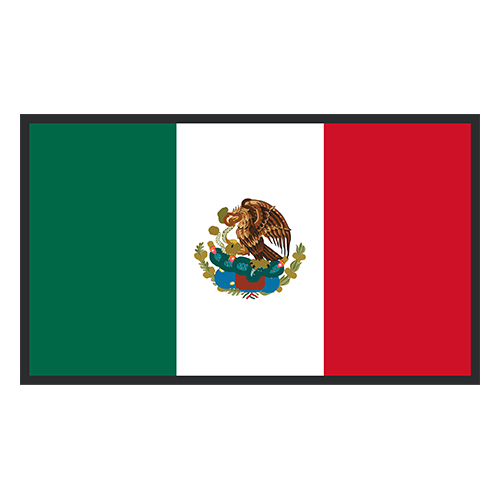
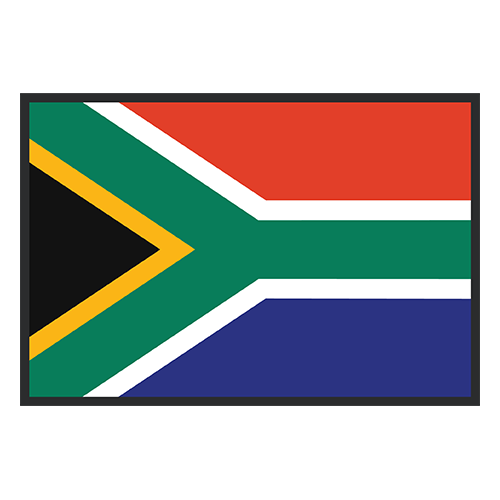
 France 16%
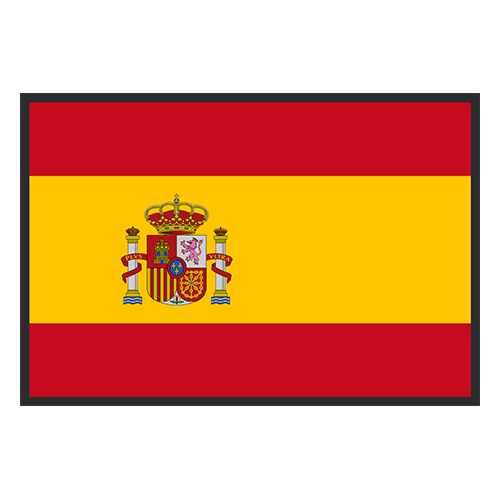 Spain 16%
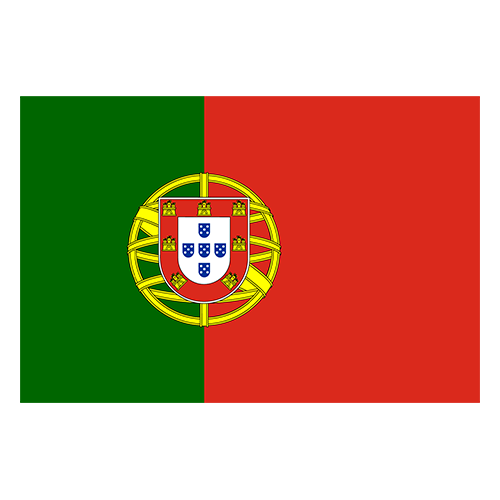 Portugal 11%
Football or soccer? Even the name has a backstory.
Start with the word itself. Soccer is not an Americanism. It is a British coinage from the 1880s, a clipping of association football that the English used happily for the better part of a century. Britain only cooled on the word in the 1980s. America, needing to tell the game apart from gridiron football, simply kept it.
The word itself is never litigated. The names around it are fought over fiercely. Major League Soccer and Inter Milan spent years at the US trademark office over a single word, Inter (Major League Soccer, LLC v. F.C. Internazionale Milano S.p.A., Opp. No. 91247160). In December 2020 the Trademark Trial and Appeal Board threw out MLS’s likelihood-of-confusion claim but let a separate descriptiveness challenge survive, and the two sides eventually settled. Nobody actually won the bare word.
The bigger courtroom story sits right next door. The promoter Relevent spent years fighting a FIFA policy that official league matches must be played in the league’s home country, after a plan to stage a competitive La Liga game (Girona v Barcelona) in Miami was blocked in 2018. A federal appeals court revived its antitrust suit in 2023 (Relevent Sports, LLC v. United States Soccer Federation, Inc., 61 F.4th 299, 2d Cir. 2023), FIFA settled in 2024 and US Soccer in 2025. As ESPN summarised it, there is now “no legal impediment” to foreign league games on American soil, although FIFA keeps the final say. The first attempt, Villarreal v Barcelona at Miami’s Hard Rock Stadium, was called off in October 2025, but over player protests and unfinished approvals, not the law. A regular-season El Clásico in Miami is now genuinely on the table.
So what is FIFA? A Swiss club bigger than the United Nations.
FIFA is not a company, and it is not a government. It is a private, non-profit association under Swiss law (the same part of the Swiss Civil Code that governs any local club), headquartered in Zurich. Yet that association governs world football through 211 member associations, eighteen more than the United Nations’ 193 member states. It can outnumber the UN because it admits places that are not sovereign countries: the four British home nations play separately, and so do Gibraltar, Hong Kong, the Faroe Islands and others.
How is it run, and who actually holds the power? It flows from the top down, from the 211 members all the way to the staff who run the building in Zurich. As a Swiss non-profit, FIFA also enjoys low-tax association status; a 2018 attempt in Zurich to start taxing it went nowhere.
When you buy a ticket, where does the money actually go?
The short answer is FIFA. It owns the commercial rights to the World Cup, sells the tickets itself, and keeps the proceeds. The host nations get no share of ticket sales, even as each US host city carries an estimated $100 to $200 million in costs for stadiums, security and transport. The stadiums take no cut either; they are rented for the tournament as neutral venues (see No. 04). The money flows up to a private association in Zurich, not out to the places that stage the games.
And FIFA pays very little tax on what it collects: it expects to bank about $13 billion across the 2023–2026 cycle as a low-tax Swiss non-profit. The hosts cleared that path too: three US states wrote special sales-tax exemptions for World Cup tickets, and in a last-minute move in late April 2026 the US Treasury agreed that the 48 national teams may each apply for 501(c)(3) status, the provision normally used by charities and churches. Read the fine print, though: it is a pathway, not a blanket grant. Teams still owe state and city tax, and players face a default 30% US withholding unless a treaty applies.
| Who | Measure | What it does |
|---|---|---|
| Missouri | SB 652 (2022) | Exempts World Cup ticket sales from state and local sales tax in Jackson County (Kansas City). |
| Georgia | HB 1034 (2022) | Exempts admissions to World Cup matches; its major-event exemption now runs to 2031. |
| Florida | HB 7071 (2022) | Exempts sales tax on admissions to World Cup matches. |
| US Treasury | Apr 2026 | Lets the 48 national teams apply individually for federal 501(c)(3) tax-exempt status. |
And FIFA earns twice. Beyond that first sale it also runs the official resale market, skimming roughly 30% out of every resale: 15% charged to the buyer and another 15% taken from the seller. Hover the chart to see where the money lands.
Pricing itself is new this year. FIFA is using dynamic pricing for the first time, so a seat’s price rises and falls with demand. The average ticket for the eight matches at MetLife ran about $2,790, and resale listings for the final climbed past $2 million.
Why America’s biggest stadiums are about to forget their own names.
FIFA insists on “clean venues,” so any arena named after a company that is not a tournament sponsor loses that name for the duration. Of the 16 host stadiums, 15 take plain geographic names. MetLife Stadium becomes New York New Jersey Stadium and will host the July 19 final; SoFi becomes Los Angeles Stadium; Lumen Field becomes Seattle Stadium; AT&T Stadium becomes Dallas Stadium. Google and Apple Maps quietly relabelled the venues to match.
| City | Everyday name | 2026 World Cup name |
|---|---|---|
| New York / New Jersey | MetLife Stadium | New York New Jersey Stadium hosts the July 19 final |
| Los Angeles | SoFi Stadium | Los Angeles Stadium |
| Seattle | Lumen Field | Seattle Stadium |
| Dallas | AT&T Stadium | Dallas Stadium |
| San Francisco Bay Area | Levi’s Stadium | San Francisco Bay Area Stadium |
| Atlanta | Mercedes-Benz Stadium | Atlanta Stadium keeps its rooftop star |
| Vancouver | BC Place | BC Place the one name that survives |
Host cities go further, drawing “clean zones,” bands of brand-exclusive territory (about two kilometres in Toronto and Vancouver) around stadiums and fan festivals, where unauthorised commercial activity is restricted and enforced by ordinary bylaw fines.
How Beckham bought a club, and how Messi gets paid.
To land David Beckham in 2007, MLS invented the Designated Player Rule (still nicknamed the “Beckham Rule”), which lets a club pay one star outside the salary cap. The real value, though, sat elsewhere in his contract: an option to buy a future expansion franchise at a fixed, discounted $25 million, exercisable once he had finished his deal and the league had grown to 20 teams. He exercised it in 2014, and the club he built, Inter Miami CF, took the field in 2020.
That clause now looks like the bargain of the century. Inter Miami is the most valuable team in MLS at $1.45 billion (Sportico, 2026), with revenue projected to climb from about $56 million before Messi to roughly $250 million. Beckham reportedly turned down a $50 million offer to sell the option back. His was only a minority founding stake, reported at 10%, yet even a tenth of a $1.45 billion club is a fortune built on a $25 million clause.
fixed price
revenue
Messi’s contract is unlike anything in sport, and its terms are deliberately murky. ESPN reported in 2023 that, on top of his salary, the deal under discussion included a cut of Apple’s MLS Season Pass revenue and a possible profit-share with Adidas (both amounts undisclosed), plus an option to take a part-ownership stake in the club that, unlike Beckham’s, would not be subsidised (ESPN, 2023). Club president Jorge Mas later put his all-in pay at “$70 million to $80 million a year, across everything” (ESPN, 2026). In effect, the league’s sponsors help pay his wages.
The Ballon d’Or clause
A 2021 Inter Miami sponsorship deal reportedly carried a “Ballon d’Or escalator.” The club’s business chief, Xavier Asensi, says he wrote in a clause that would double the sponsor’s fee if the club ever signed a player who had won at least five Ballon d’Or awards. In football history, only Messi and Ronaldo have ever cleared that bar (ESPN, 2026).
Why footballers send their faces offshore.
A top player is two businesses in one: the athlete who plays, and the brand whose face sells shirts. Many split the second business off into an image-rights company that licenses their name, image and likeness. Routed that way, the income is taxed at corporate rates (in the UK, 19% on small profits, rising to 25%) instead of the 45% top personal rate, and sometimes through an offshore company to go lower still.
But whether the structure saves any tax turns on something the diagram leaves out: the player’s personal tax residency, and the controlled-foreign-company (CFC) rules of the country he lives in. Park the image-rights company somewhere with low corporate tax, and his home tax authority may look straight through it. CFC and related anti-avoidance rules let a country tax the profits of a low-taxed company that its residents control as if the offshore wrapper were not there. So the structure tends to work only where the player is genuinely resident in a low-tax country, or where the company earns real, arm’s-length licensing income that his country of residence will respect. For a footballer who changes clubs and countries every few years, residency is half the battle.
For a while, even that looked bulletproof. The structure was effectively legitimised by the 2000 Sports Club case, an anonymised ruling widely understood to involve Arsenal and players Dennis Bergkamp and David Platt, which accepted image-rights payments as genuine commercial deals. Then the tide turned, and the law has been tightening ever since.
- 2000Sports Club Arsenal · Bergkamp · PlattA tax body accepts that image-rights payments can be genuine, blessing the basic structure.
- Jul 5, 2017Rangers UK Supreme CourtThe “redirection principle”: money routed to a third party for an employee’s work is still taxable as that employee’s income.
- Mar 22, 2019Hull City / Geovanni tax tribunal£440,800 paid to a British Virgin Islands company for a Hull player is ruled disguised earnings, not real image-rights income.
So can a player still use an image-rights company? There is no clean answer. Sports Club says a genuine arrangement is legitimate; Rangers and the Hull case say a sham or inflated one will be unwound and taxed as ordinary salary. Where the line falls is a question of fact, decided case by case, and the authorities keep moving it: HMRC now scrutinises any image-rights share that looks large next to a player’s wages. The tool itself is legal. Whether a particular structure survives is genuinely uncertain, and that uncertainty is the current state of the law.
Four court cases that quietly rewrote football.
Some of the most important rules in modern football were not written by players, clubs or referees at all. They were settled in courtrooms. Four rulings in particular reshaped the game: one opened up the transfer market, two have been chipping away at FIFA and UEFA’s control, and one reopened the United States to foreign league games.
- Dec 15, 1995Bosman EU · C-415/93An out-of-contract player can move clubs for free, and quotas on EU-national players are unlawful. It is named after Jean-Marc Bosman, a Belgian midfielder who sued when his club blocked his transfer, and it is the foundation of the modern transfer market.
- Dec 21, 2023European Super League EU · C-333/21FIFA and UEFA cannot require their prior approval of a new competition without transparent, objective rules. The case grew out of the breakaway league that collapsed within 72 hours in 2021, yet the court pointedly did not bless the Super League itself.
- Oct 4, 2024Diarra EU · C-650/22Key FIFA transfer rules, including a new club’s joint liability for a player’s contract breach, unlawfully restrict free movement and competition. Brought by former France midfielder Lassana Diarra, it has been called the biggest threat to the transfer system since Bosman.
- 2023–2025Relevent US courts · 61 F.4th 299A revived antitrust suit and two settlements clear the path for foreign league matches on American soil. It means a competitive La Liga or Premier League fixture could one day be played in the United States (see No. 01).
Football has its own supreme court, in a small Swiss town.
Football runs a private justice system, and almost no fan knows it. The Court of Arbitration for Sport (CAS), in Lausanne, Switzerland, hears disputes among FIFA, national associations, clubs, players and officials. It applies FIFA’s own regulations first, and Swiss law in addition.
This is not optional. FIFA’s Statutes (articles 49 to 51) recognise CAS, give a party 21 days to appeal, and bar clubs and players from taking football disputes to ordinary national courts. A CAS award can be challenged in just one place, the Swiss Federal Tribunal, within 30 days and on five narrow grounds set by Swiss arbitration law. Fewer than one challenge in twenty succeeds.
Suárez’s World Cup bite
- FIFA banned Luis Suárez for four months after he bit Italy’s Giorgio Chiellini at the 2014 World Cup.
- CAS upheld the ban but limited it to official matches, freeing him to train and sign for Barcelona.
Manchester City v UEFA
- UEFA banned City from Europe for two years and fined them €30M over financial-fair-play breaches.
- CAS overturned the ban (most charges were time-barred or unproven) and cut the fine to €10M.
Russia’s doping ban
- WADA banned Russia from world sport for four years over a state-backed doping scheme.
- CAS cut it to two years and barred Russia’s flag and anthem from the Olympics and the World Cup.
The first World Cup that trades like a stock.
Here is the strangest thing about 2026: you can trade the World Cup like a stock. Alongside the bookmakers, a new kind of venue has exploded, the prediction market, where you buy and sell contracts on who will win. By early June, Polymarket’s World Cup winner market alone had taken in more than $1.7 billion of trades (Polymarket), the largest soccer prediction market ever, pricing France at about 18% and Spain at about 17% to lift the trophy.
A prediction market is not quite a bet. Instead of staking against a bookmaker’s built-in margin, you trade a yes/no contract with other users on a two-sided exchange, and the price, quoted from 0 to 100%, is the implied probability. Two venues dominate, in the US and worldwide: Kalshi, a US federally-regulated exchange, and Polymarket, the crypto-native platform that grew up offshore. Both call the product a “swap,” a commodity derivative rather than gambling. The idea is old (the University of Iowa has run real-money election markets since 1988); what is new is the scale and the legal blessing. Regulated US sports contracts only began trading in early 2025, and trading volumes have since soared.
- 2020Kalshi is licensedThe CFTC grants Kalshi a federal “designated contract market” licence, the first new US event exchange in years.
- 2022Polymarket is pushed offshore CFTC · $1.4MThe CFTC fines Polymarket and orders it to block US users for running an unregistered market, sending it offshore.
- Sep 12, 2024Election contracts cleared D.D.C. · No. 1:23-cv-03257A federal district court holds Kalshi’s political-event contracts are not “gaming” under the Commodity Exchange Act. The CFTC appeals, then drops the case in 2025.
- Jan 2025Sports contracts go liveKalshi starts listing sports event contracts; Nevada, New Jersey, Maryland and other states fire back with cease-and-desist letters.
- Nov 2025Polymarket is cleared to return CFTC · licensedAfter buying a CFTC-licensed exchange for $112M, Polymarket wins approval to re-enter the US as a regulated market.
- Apr 6, 2026Federal law wins, for now 3d Cir. · Kalshi v. FlahertyThe Third Circuit is the first appeals court to hold the Commodity Exchange Act preempts state gambling laws for sports contracts. The CFTC also sues Arizona, Connecticut and Illinois; a circuit split looks bound for the Supreme Court.
So is a World Cup contract a regulated derivative or just gambling in a new wrapper? The law has not decided. For sports the line is thin, and the real question is less “is it gambling?” than “who decides: the federal CFTC, or the states?” The same contract can be lawful in one state and prosecuted in the next, and the question looks bound for the Supreme Court.
Last call: who really controls the beer.
After the courts, the statutes and the arbitrators, the clause that best shows who really runs football is the smallest of all: the one about beer. Follow the pint and the whole system appears — a sponsor rewriting a country’s law, a host pushing back, and a century of local rules about where a fan may lawfully raise a glass.
The bill they nicknamed after a beer
Budweiser has been the World Cup’s official beer since the 1986 tournament in Mexico — 40 years by 2026. Brazil, the 2014 host, had long kept alcohol out of its grounds: the rule grew from state laws (São Paulo banned stadium drink in 1996, after a fan was killed in stadium violence the year before) and ran through its 2003 Fan Statute, the Estatuto do Torcedor (amended in 2010 to spell the ban out in Article 13-A).
But beer is a sponsor’s contractual right, and FIFA treated it as a condition of hosting. Its then-secretary-general, Jérôme Valcke, put it plainly:
He went further: the right to sell beer, he said, “has to be a part of the law.” And it was. Brazil’s Lei Geral da Copa (Federal Law No. 12.663/2012, signed by President Dilma Rousseff) suspended the stadium-drink ban for FIFA’s events and reserved sales to the tournament’s official sponsors. It never ordered that beer be sold; it simply cleared what stood in the way. Watching from afar, the comedian John Oliver dubbed it the “Budweiser Bill.” A sponsorship deal had quietly rewritten a national public-safety law.
And then it ran the other way
Eight years later the same clause cut against the sponsor. Anheuser-Busch InBev had reportedly paid some $75 million to pour at Qatar 2022, then watched FIFA switch it off two days before kickoff: no alcoholic beer for ordinary fans at the eight stadiums, only alcohol-free Bud Zero on the concourse, with the real thing left to hospitality suites and the official fan zones. Budweiser’s own account posted, then hastily deleted, four words: “Well, this is awkward…” When host and sponsor finally clashed, the host won.
The pint always finds its level. In June 2026 the tournament comes home to North America, Budweiser marks four decades on the shirt, and the taps run from Vancouver to Mexico City. Wherever you watch, just check the local law before you raise it. Cheers.
FIFA Statutes (2024 edition)
The constitution of world football: the Congress, Council and general secretariat, and the recognition of CAS in articles 49 to 51.
“The Congress is the supreme and legislative body” of FIFA; the Statutes recognise the Court of Arbitration for Sport and bar recourse to ordinary courts.
Read source ↗
Bosman, Case C-415/93
The judgment that freed out-of-contract players to move and struck down quotas on EU-national players.
Transfer rules and nationality quotas that obstructed the free movement of players were held contrary to EU law.
Read source ↗
European Super League, Case C-333/21
FIFA and UEFA cannot gatekeep new competitions without transparent, objective and non-discriminatory criteria.
The prior-approval and participation rules were found to abuse a dominant position. The Court did not rule that the Super League itself must be approved.
Read source ↗
FIFA (the Diarra case), Case C-650/22
Core FIFA transfer rules, including a new club’s joint liability for a breach, unlawfully restrict free movement and competition.
Rules on compensation, sporting sanctions and the issue of an international transfer certificate were held to impede the free movement of professional players.
Read source ↗
Relevent Sports v. US Soccer, 61 F.4th 299
The decision reviving the antitrust suit that, after settlements, cleared the path for foreign league games on US soil.
A sports body’s own rule can itself be the concerted action challenged under the Sherman Act. FIFA settled in 2024 and US Soccer in 2025.
Read source ↗
RFC 2012 plc (Rangers), [2017] UKSC 45
The “redirection principle”: pay routed to a third party for an employee’s work is still taxable as employment income.
Sums paid into a trust for the benefit of employees were earnings, taxable when paid. The decision reshaped scrutiny of footballers’ pay structures.
Read source ↗
Prediction Markets: Policy Issues for Congress
A neutral overview of event-contract exchanges, the CFTC’s authority, and the federal-versus-state fight over sports contracts.
Sports-specific markets raise the question of whether they conflict with state gambling laws and federal gaming law, alongside regulatory-arbitrage and insider-trading concerns.
Read source ↗
AGs James & Davenport subpoena FIFA over ticketing
The New York and New Jersey inquiry into the 2026 World Cup’s dynamic pricing and resale practices.
The attorneys-general subpoenaed FIFA over how prices and seat categories changed after sales began. A separate EU complaint was filed in March 2026.
Read source ↗Disclaimer
This longread is for general information and entertainment, and is not legal advice. Figures, dates, case citations and characterizations are simplified for a general audience and reflect developments up to the date above; sports, tax and competition law differ by country and change quickly. For advice on sponsorship, image rights, ticketing, transfers or a dispute headed for arbitration, please contact Buzko Krasnov directly.